



British Citizenship: The Citizenship Ceremony

In This Article:
If your British citizenship application has been granted and you are required to attend a ceremony, approval is not the final step. An adult applicant will normally need to attend a citizenship ceremony, make an oath of allegiance or affirmation and make the citizenship pledge before becoming a British citizen.
This article concerns people becoming British by naturalisation or registration, rather than British citizenship by automatic acquisition. It explains who must attend, the 3-month deadline, the ceremony fee, what happens on the day and the practical steps to consider afterwards.
1. Who Needs to Attend a British Citizenship Ceremony?
An adult who is approved for naturalisation as a British citizen or registration as a British citizen must normally make the citizenship oath or affirmation and pledge at a ceremony. The relevant age is the applicant’s age when the application is decided. A person who applied while under 18 but turns 18 before the grant will normally need to attend a ceremony and pay the ceremony fee.
A child who remains under 18 when the application is decided is not required to attend. A ceremony is also not part of acquiring British citizenship automatically by operation of law.
2. Background to Citizenship Ceremonies
Citizenship ceremonies were introduced in 2004. The requirement was created by amendments to the British Nationality Act 1981 made by the Nationality, Immigration and Asylum Act 2002 and applied to relevant applications made on or after 1 January 2004. The first ceremony was held in Brent on 26 February 2004.
The ceremonies were intended to mark the significance of becoming British and to provide a formal occasion on which the state and local community could welcome new citizens. Local authorities continue to organise ceremonies throughout the UK, with different arrangements applying in Northern Ireland, the Crown Dependencies, British Overseas Territories and overseas posts.
3. How to Arrange a Citizenship Ceremony
After approval, the Home Office will send an invitation telling the applicant which local authority or other authorised body to contact. Use the GOV.UK service to find your local council if necessary, but follow the authority identified in the invitation unless the Home Office agrees to a transfer. You will normally have selected the local authority when submitting the citizenship application form.
The applicant must attend the ceremony within 3 months of receiving the invitation. It is not enough simply to make a booking within that period for a later date. The appointment should therefore be arranged as soon as possible.
What if the ceremony cannot take place within 3 months?
An extension may be possible where there is an acceptable reason, such as serious illness, temporary absence or an administrative problem, but it is not automatic. The applicant should contact the Home Office or the Citizenship Ceremonies Support Team promptly, explain the circumstances and provide supporting evidence where appropriate.
If the applicant does not complete the ceremony within the permitted period and no extension or exemption is granted, the person cannot be registered or naturalised on that approval. The local authority may be required to return the undated certificate to the Home Office.
4. How Much Does a Citizenship Ceremony Cost?
The Home Office fee for arranging a citizenship ceremony is £130 as at 1 October 2026. This fee is added to the relevant nationality application fee where a ceremony is required. You may wish to check the current Home Office nationality fees to assist with planning.
Standard ceremonies are usually held in groups. An applicant may ask for a private ceremony, but the local authority will normally charge an additional fee. Private ceremony charges, available dates and guest limits vary between councils.
5. What Should I Take to the Ceremony?
The applicant must take the Home Office ceremony invitation, whether issued as a letter or in another accepted form. The local authority may also require photographic identification and may ask for further evidence, such as proof of address. The council’s booking confirmation should be checked carefully before attending.
Applicants are usually permitted to bring 2 guests to a group ceremony, but this is not a universal entitlement. The local authority sets the practical capacity and arrangements for each venue.
6. What Happens During a Citizenship Ceremony?
During the ceremony, the applicant will make an oath of allegiance, or an affirmation if they prefer not to swear by God, and will then make the citizenship pledge. The oath or affirmation concerns allegiance to His Majesty the King, while the pledge concerns loyalty to the United Kingdom and respect for its rights, freedoms, democratic values and laws.
The words are provided at the ceremony. In Wales, an approved Welsh-language form of the oath or affirmation and pledge may be used.
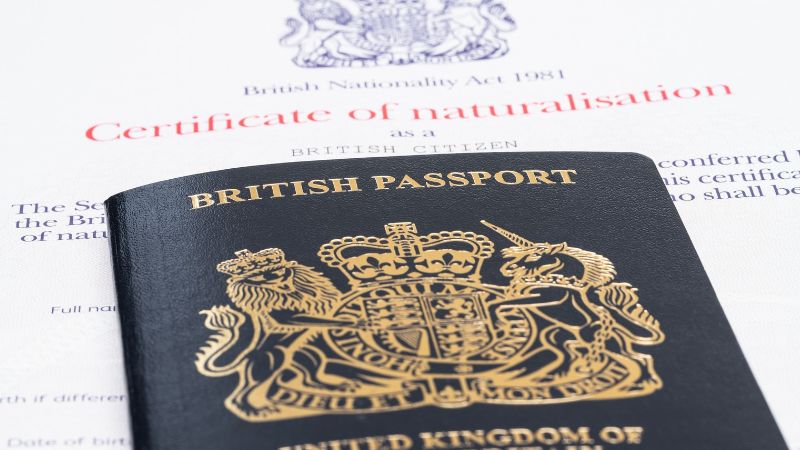
At the end of the ceremony, the applicant receives the certificate of naturalisation or registration and a welcome pack. The certificate is dated with the ceremony date. The details should be checked immediately and the certificate kept safely.
7. Can a Citizenship Ceremony Take Place Outside the UK?
A person who applied from outside the UK may be invited to attend a ceremony arranged by an embassy, consulate or other authorised overseas post. However, a person who applied for citizenship in the UK cannot simply choose to have the ceremony abroad.
If an applicant is only temporarily overseas, they may be asked to postpone the ceremony until returning to the UK. They should still act within the 3-month period and seek an extension or other direction from the Home Office if necessary. A longer period abroad may also raise questions about the applicant’s intention to make the UK their principal home where that requirement applies.
8. Who Does Not Need to Attend a British Citizenship Ceremony?
A person registering as a British overseas territories citizen, British overseas citizen or British subject does not attend a British citizenship ceremony, although an oath or affirmation of allegiance may still be required. These are different forms of British nationality and should not be confused with registration as a British citizen.
The Home Secretary may also waive or modify the ceremony, oath, pledge or time-limit requirements in the special circumstances of an individual case. Current guidance gives chronic illness or disability as examples of circumstances that may justify an exemption, but the decision is case-specific. An exemption from the English language requirement does not, by itself, remove the ceremony requirement.
A person who becomes a British citizen under the Windrush scheme may choose whether to attend a ceremony. If they choose to attend, there is no ceremony fee.
9. After the Ceremony: Travel and Important Documents
A successful British Citizenship by Naturalisation application does not itself produce a British passport. A first passport application is separate and HM Passport Office will consider identity, nationality and entitlement before issuing the passport. The citizenship certificate is evidence of the grant but it is not a travel document.
Before travelling, allow time to obtain a British passport or, where appropriate, a certificate of entitlement to the right of abode. Specific rules may apply to Irish citizens and some dual citizens. Follow the current Home Office instructions about destroying or returning any biometric residence document after the ceremony.
After the ceremony, keep your certificate safe: a replacement naturalisation or registration certificate may be needed if it is lost, damaged or contains an error.
10. Contact Our Immigration and Nationality Barristers
For expert advice and assistance with a British citizenship application, a ceremony deadline or extension request, or a nationality or passport application, contact our immigration and nationality barristers on 0203 617 9173 or complete our enquiry form below.
11. Frequently Asked Questions
Do I become a British citizen when I receive the approval letter?
Not usually, if you are required to attend a ceremony. The approval letter confirms the decision, but you normally become British only after making the oath or affirmation and pledge and receiving the dated certificate at the ceremony.
How long do I have to attend a citizenship ceremony?
You must normally attend within 3 months of receiving the Home Office invitation. Booking within the period is not enough if the ceremony itself will take place later.
Can the 3-month ceremony deadline be extended?
Yes, an extension may be granted where there is an acceptable reason, but it is not automatic. Contact the Home Office promptly and provide evidence of the reason for delay.
Can I have a private citizenship ceremony?
Yes. Local authorities usually offer private ceremonies for an additional charge. Prices, dates, guest limits and venue arrangements vary by council.
What documents should I take to the ceremony?
Take the Home Office ceremony invitation and any photographic identification or other documents required by the local authority. Check the council’s confirmation before attending.
Can I attend a citizenship ceremony abroad?
It depends on where the citizenship application was made. A person who applied from outside the UK may be offered an overseas ceremony, but a person who applied in the UK cannot simply move the ceremony abroad.
Do children need to attend a citizenship ceremony?
A child who remains under 18 when the application is decided does not need to attend. If the applicant turns 18 before the grant, a ceremony and the ceremony fee will normally be required.
What happens if I miss my citizenship ceremony?
Without an authorised extension or exemption, you may be unable to complete the approved registration or naturalisation. Contact the Home Office immediately rather than assuming a late ceremony will be accepted.
Is a citizenship ceremony required under the Windrush scheme?
No. A person granted British citizenship under the Windrush scheme can choose whether to attend, and there is no ceremony fee if they do attend.
Can I travel using my citizenship certificate?
No. The certificate is not a travel document. After becoming British, you will normally need a British passport or, where appropriate, a certificate of entitlement to the right of abode for travel to the UK.
Please note that the information provided in this article is for general guidance only and is based on the immigration rules and policies in force at the date of publication. Immigration law and Home Office policy can change frequently, and requirements may vary depending on individual circumstances. Legal advice should always be sought in relation to your specific situation.