

EUSS SETTLED STATUS
EU Settlement Scheme Settled Status: Eligibility, Requirements & How to Apply
In This Guide
An EU Settlement Scheme settled status allows eligible EU, other EEA and Swiss citizens, and their eligible family members, to live in the UK permanently.
1. EU Settlement Scheme Settled Status: Overview
The EU Settlement Scheme was introduced following the UK’s departure from the European Union. It protects the immigration status of eligible EU, other EEA and Swiss citizens who were living in the UK by the end of the post-Brexit transition period on 31 December 2020, together with certain eligible family members.
For most people, the main deadline to apply to the EU Settlement Scheme was 30 June 2021. However, the scheme remains relevant. Many people still need advice because they hold pre-settled status and now wish to apply for settled status, because they need to understand whether they can make a late application, because they are joining family members, or because their case involves retained rights, derivative rights or another complex Appendix EU issue.
Settled status is usually granted where an applicant has completed a continuous qualifying period of residence of at least five years. However, the rules for some pre-settled status holders have been simplified. In particular, some applicants may qualify for settled status if they have been resident in the UK for at least 30 months in total during the most recent 60-month period.
This guide explains the requirements for EUSS settled status, the rules on absences, how pre-settled status holders can move to settled status, when late applications may still be possible, what evidence is required and what options may be available if an application is refused or rejected.
To discuss your application for EUSS Settled Status, contact our immigration barristers on 0203 617 9173 or complete our enquiry form.
2. What Is EU Settlement Scheme Settled Status?
EU Settlement Scheme settled status is the immigration status granted to eligible applicants under Appendix EU who meet the requirements for indefinite leave under the scheme.
If the application is made from inside the UK, settled status is a form of indefinite leave to remain. If the application is made from outside the UK, it is a form of indefinite leave to enter. In practical terms, both allow the holder to live in the UK permanently, provided the status is not lost, cancelled, revoked or invalidated.
Settled status is different from pre-settled status. Pre-settled status is limited leave, normally granted for five years, although it may be extended. Settled status is indefinite leave and is therefore the more secure form of immigration status.
Rights With Settled Status
A person with settled status can generally:
- live in the UK permanently;
- work in the UK;
- study in the UK;
- use the NHS, subject to the usual rules on entitlement;
- access public funds, such as benefits and pensions, if eligible;
- travel in and out of the UK;
- use their settled status as a step towards British citizenship, if they meet the separate requirements for naturalisation or registration.
Settled status can still be lost through long absence from the UK. In most cases, a person with settled status can spend up to five years in a row outside the UK, the Channel Islands and the Isle of Man without losing their status. Swiss citizens and their family members are generally subject to a four-year absence period.
3. Who Can Apply for EUSS Settled Status?
The EU Settlement Scheme is not a general settlement route. It is a specific post-Brexit scheme for eligible EU, other EEA and Swiss citizens and certain family members.
The exact requirements depend on the applicant’s category under Appendix EU. Common categories include:
- EU, other EEA and Swiss citizens who were living in the UK by 31 December 2020;
- family members of relevant EU, other EEA or Swiss citizens;
- joining family members who came to the UK after 31 December 2020 and meet the relevant family relationship and deadline requirements;
- family members who have retained a right of residence following death, divorce, dissolution of a civil partnership, domestic abuse or another qualifying event;
- certain persons with derivative rights of residence;
- certain persons with a Zambrano right to reside, where they remain within the scope of Appendix EU;
- eligible family members of persons of Northern Ireland;
- certain family members of qualifying British citizens, in limited circumstances.
Some people do not need to apply. Irish citizens generally do not need status under the EU Settlement Scheme, although their non-British family members may need to apply. A person who already has indefinite leave to enter or remain may not need to apply, although applying under the EU Settlement Scheme may sometimes provide a more practical digital status or assist family members. British citizens cannot apply to the EU Settlement Scheme.
The categories under Appendix EU are detailed and technical. A person may appear to fall outside the scheme at first sight but still qualify under a retained rights, joining family member, derivative rights or other specialist category. Conversely, having previously held an EU residence document does not necessarily mean that a person qualifies for settled status now.
4. EU Settlement Scheme Settled Status Requirements
To qualify for EUSS settled status, an applicant must normally satisfy three broad requirements:
- they must make a valid application;
- they must meet the eligibility requirements under Appendix EU;
- they must not fall for refusal on suitability grounds.
Valid Application
A valid application is the procedural gateway to the EU Settlement Scheme. If an application is invalid, it will not be considered on its substantive merits.
A valid EUSS application will normally require the applicant to:
- use the correct application process;
- provide the required proof of identity and nationality;
- provide biometrics where required;
- establish entitlement to apply from outside the UK, if applying from overseas;
- meet the applicable deadline or show reasonable grounds for delay, where the application is late;
- in a joining family member case, avoid falling within the specified enforcement-case provisions.
Since 9 August 2023, the deadline requirement has been part of the validity assessment for applications made after the relevant deadline. This means that a late application may be rejected as invalid if the applicant does not provide a sufficient explanation and evidence of reasonable grounds for the delay.
Eligibility Under Appendix EU
The eligibility requirements depend on the category relied upon. For many applicants, the key questions are whether they:
- are an EU, other EEA or Swiss citizen who started living in the UK by 31 December 2020;
- are the family member of a relevant EU, other EEA or Swiss citizen;
- have completed the required period of residence;
- have maintained the required continuity of residence;
- can rely on pre-settled status and the 30-months-in-60-months rule;
- fall within a retained rights, derivative rights, joining family member or other specific category.
For settled status, the applicant will usually need to show a continuous qualifying period of residence of at least five years. Some applicants may qualify earlier, for example in limited circumstances involving death of a relevant family member or other specific provisions under Appendix EU.
Suitability Requirements
The suitability requirements concern matters such as criminality, deception, exclusion, deportation and conduct relevant to public policy, public security or public health.
Many applicants have no suitability issue. However, any criminal convictions, deportation decisions, exclusion decisions, false documents or inaccurate information should be considered carefully before an application is submitted. A suitability issue can lead to refusal, cancellation or other serious consequences.
5. Continuous Residence and Absences for EUSS Settled Status
Continuous residence is central to most EUSS settled status applications.
For a first-time application for settled status, an applicant will usually need to show that they have lived in the UK, the Channel Islands or the Isle of Man for at least five continuous years. In general, this means being present for at least six months in any 12-month period during the five-year qualifying period.
There are exceptions. Some absences of more than six months will not break continuous residence, including:
- one period of up to 12 months for an important reason, such as childbirth, serious illness, study, vocational training or an overseas work posting;
- certain absences related to coronavirus;
- compulsory military service of any length;
- time spent abroad as a Crown servant or as the family member of a Crown servant;
- time spent abroad in the armed forces or as the family member of someone in the armed forces;
- certain work in the UK marine area.
The absence rules can be fact-sensitive. It is important to distinguish between:
- whether a person has completed five years’ continuous qualifying residence;
- whether any period of absence has broken continuity;
- whether an absence falls within a permitted exception;
- whether a pre-settled status holder can rely on the 30-months-in-60-months rule.
Applicants should not assume that a long absence is fatal, but nor should they assume that an absence will be disregarded simply because they retained pre-settled status or continued to have family ties in the UK.
6. Moving From Pre-Settled Status to Settled Status
Many current EUSS settled status applications are made by people who already hold pre-settled status.
If you have pre-settled status, you can apply for settled status as soon as you meet the requirements. You do not need to wait until your pre-settled status is about to expire.
The 30 Months in the Last 60 Months Rule
For some pre-settled status holders, the rules on residence have been simplified. A pre-settled status holder may be able to qualify for settled status where they have been resident in the UK for at least 30 months in total during the most recent 60-month period.
This rule is important because it can help applicants who may have had absences that would have caused difficulty under the older continuous residence analysis. However, it should not be treated as a universal rule for every EUSS applicant. It is particularly relevant to applicants who already hold pre-settled status under Appendix EU.
In practice, applicants should consider:
- when their continuous qualifying period began;
- whether they hold pre-settled status under Appendix EU;
- how much time they have actually spent in the UK during the most recent 60 months;
- whether their residence can be evidenced through automated checks or documentary evidence;
- whether any other eligibility or suitability issues arise.
Automatic Conversion to Settled Status
Some pre-settled status holders may be automatically converted to settled status without making a further application. The Home Office carries out automated checks, including checks against tax and benefits data, to identify some individuals who appear to meet the requirements for settled status.
If the automated process confirms eligibility, the person should receive confirmation that they have been granted settled status.
Automatic conversion will not apply to everyone. Some pre-settled status holders may not be converted automatically, including:
- people whose residence cannot be confirmed through automated tax or benefits checks;
- non-EEA national family members;
- joining family members;
- children under 18;
- people with other eligibility requirements, such as derivative rights cases;
- people who obtained another form of UK immigration status after pre-settled status.
A person who is not converted automatically may still be able to apply for settled status manually if they meet the requirements.
Pre-Settled Status Extensions and Cancellation Risk
Pre-settled status may be extended before it expires. However, an extension is not the same as settled status.
If the Home Office cannot automatically grant settled status, a person may continue to hold pre-settled status. However, pre-settled status can be at risk if the person no longer meets the requirements, particularly where they have clearly ceased to maintain continuous residence in the UK.
Before pre-settled status is removed, the individual should normally be contacted and given an opportunity to provide evidence of residence or reasons for absence. It remains important to keep UKVI account contact details up to date so that any such communication is received.
7. Can You Still Apply to the EU Settlement Scheme After the Deadline?
The main deadline for most people to apply to the EU Settlement Scheme was 30 June 2021. However, some people have later deadlines, and some late applications may still be accepted where the applicant can show reasonable grounds for the delay.
This issue is now especially important because, for applications made on or after 9 August 2023, the deadline requirement is normally considered at the validity stage. If the applicant does not meet the deadline and does not provide sufficient reasons and evidence for the delay, the application may be rejected as invalid.
Reasonable Grounds for a Late Application
Reasonable grounds are assessed case by case. The applicant must explain why they did not apply by the applicable deadline and why they did not apply sooner after the deadline passed.
Possible examples may include:
- the applicant was a child and no application was made for them;
- serious illness or medical treatment prevented an earlier application;
- the applicant lacked physical or mental capacity;
- the applicant had significant care or support needs;
- domestic violence, abuse or controlling behaviour prevented an earlier application;
- the applicant had another form of UK immigration permission and did not realise they had become eligible under the EUSS;
- another compelling practical or compassionate reason prevented an earlier application.
The longer the delay, the more important it usually becomes to explain the whole period of delay. Evidence is also important. A bare statement that the applicant did not know about the scheme may not be enough, particularly where there has been a long delay.
Joining Family Member Deadlines
Joining family members may still be able to apply to the EU Settlement Scheme if they meet the family relationship and sponsor requirements.
As a broad guide, joining family members are usually expected to apply within the applicable period after arriving in the UK. The exact deadline depends on the category, how the person entered the UK and the rules in force at the time of application.
A joining family member who applies late will usually need to explain and evidence the delay. If they entered the UK as a visitor, entered unlawfully or previously had an EUSS application rejected or refused, the validity and eligibility issues can become more complex.
Historical and Transitional Deadlines
Some EUSS deadlines were transitional and are now historical. For example, special provisions applied to certain spouses and civil partners of Swiss citizens, but the relevant end date of 31 December 2025 has now passed.
Where a historical deadline has been missed, the question is no longer simply whether the person fell within the original category. It is whether they can still make a valid application and, if late, whether they can show reasonable grounds for the delay.
8. Evidence Needed for an EUSS Settled Status Application
The evidence required for an EUSS settled status application depends on the applicant’s category and the issue that needs to be proved.
Many applications involve three core evidential questions:
- identity and nationality;
- UK residence;
- family relationship, where the application depends on a family member.
Where the application is late, evidence of reasonable grounds for the delay will also be required.
Automated Residence Checks
In many cases, automated checks may help confirm residence through tax and benefits records. However, automated checks do not always capture the full picture. A person may have lived in the UK but have limited HMRC or benefits records, for example because they were studying, caring for children, supported by a family member, self-sufficient, outside employment, newly arrived as a joining family member, or relying on another category.
If automated checks do not establish the required residence, the applicant may need to provide documentary evidence.
Evidence of Residence
Evidence of residence may include, depending on the facts:
- payslips or P60s;
- letters from employers;
- bank statements showing UK transactions;
- tenancy agreements or mortgage statements;
- council tax bills;
- utility bills;
- GP, hospital or dental records;
- education records;
- letters from schools, colleges or universities;
- official letters from public bodies;
- travel records;
- dated correspondence showing the applicant at a UK address.
The best evidence will usually be objective, dated and capable of showing physical presence in the UK during the relevant period. Evidence should be organised clearly so that it addresses the legal requirement rather than simply uploading a large quantity of documents.
Evidence of Family Relationship
Family member applications may require evidence of both the relationship and the sponsor’s status or eligibility.
Depending on the relationship, evidence may include:
- a marriage certificate;
- a civil partnership certificate;
- a birth certificate;
- adoption documents;
- evidence of durable partnership;
- evidence of dependency;
- evidence that the relevant relationship existed by the required date;
- evidence that the relationship continues to exist at the date of application;
- evidence of retained rights following divorce, death, domestic abuse or another qualifying event.
Family member applications can be particularly technical where the applicant is a durable partner, dependent relative, joining family member, retained-rights applicant or derivative-rights applicant.
Evidence for Late Applications
A late application should include a clear explanation of the delay and evidence that supports that explanation.
Depending on the case, this might include:
- medical evidence;
- social services records;
- evidence from a school, local authority or guardian;
- evidence of domestic abuse or controlling behaviour;
- evidence of care needs or lack of capacity;
- previous immigration documents;
- correspondence showing when the applicant became aware of the need to apply;
- evidence explaining why there was no earlier practical opportunity to apply.
The evidence should address the full period of delay, not only the original missed deadline.
9. Applying for EUSS Settled Status From Inside or Outside the UK
Most EUSS applications are made online. Some applicants can use the identity document checking app, while others may need to send identity documents or attend a biometrics appointment.
Some categories cannot use the standard online process and may require a paper application form. This can include certain derivative rights, Zambrano and qualifying British citizen family member cases.
Applying From Inside the UK
If applying from inside the UK, the applicant will need to confirm their identity and nationality and provide biometrics where required. Non-EEA national applicants may need to attend a biometric appointment.
If the application is valid, a certificate of application should be issued. This can be important because it may protect certain rights while the application is pending.
Applying From Outside the UK
Some applicants can apply to the EU Settlement Scheme from outside the UK. EU, other EEA and Swiss citizens may be able to apply from outside the UK if they have a valid biometric passport or national identity card.
Non-EEA family members applying from outside the UK will need to consider carefully whether they can apply directly to the EUSS or whether they first need an EU Settlement Scheme family permit to travel to the UK.
The ability to apply from outside the UK is technical and depends on the applicant’s nationality, documents, family relationship and status history.
Updating Your UKVI Account
Applicants and status holders should keep their UKVI account up to date. This is particularly important if they change their passport, identity document, email address, telephone number or postal address.
Failure to update account details can cause problems proving status, receiving Home Office communications, travelling to the UK or responding to any request for evidence.
10. How to Prove EUSS Settled Status
EUSS settled status is a digital immigration status. A decision letter confirms the outcome of the application, but the letter itself is not proof of immigration status.
A person with settled status normally proves their status by accessing their UKVI account and generating a share code. Employers, landlords and other relevant bodies can then use the share code and date of birth to check the person’s immigration status and rights.
Non-EEA national family members who previously held a biometric residence card should not assume that the physical card can be used to prove all rights. Proof of status is increasingly digital.
It is important to check that the eVisa details are correct and that the UKVI account is linked to a valid identity document. If the account contains outdated details, travel and right-to-work checks may be delayed or disrupted.
11. Family Members, Children and British Citizenship
Settled status can affect family members, children and future British citizenship applications.
Family Members Joining or Remaining in the UK
Family members of EU, other EEA and Swiss citizens may be able to join or remain in the UK under the EU Settlement Scheme if the relevant family relationship, sponsor and deadline requirements are met.
For many family members, the relationship must have existed by 31 December 2020 and must continue to exist at the date of application. Children born or adopted after that date may be treated differently.
Joining family member applications should be prepared carefully. Issues often arise around proof of relationship, dependency, first arrival in the UK, entry as a visitor, late application reasons and whether the sponsor has settled or pre-settled status.
Children Born After Settled Status
A child born in the UK to a parent with settled status will usually be British automatically.
Where a parent had pre-settled status at the time of the child’s birth, the position can be more complicated. A child may be eligible for pre-settled status or settled status depending on the family circumstances, but they will not always be British automatically.
In some cases, a child born in the UK after 1 July 2021 may still be British automatically if the parent later obtained settled status and would have qualified for settled status by the relevant earlier date. This is a technical area and should be considered carefully before any nationality application is made.
Applying for British Citizenship After Settled Status
Settled status is often an important step towards British citizenship.
Many applicants will need to hold settled status for 12 months before applying to naturalise as a British citizen. Different timing may apply to applicants who are married to, or in a civil partnership with, a British citizen.
British citizenship has separate requirements, including residence, absences, good character, English language, Life in the UK and future intentions. A grant of settled status does not guarantee that a citizenship application will succeed.
12. EUSS Settled Status Fees and Processing Times
Application Fee and Immigration Health Surcharge
There is no application fee for an EU Settlement Scheme application.
Applicants under the EU Settlement Scheme are also not required to pay the Immigration Health Surcharge. However, there may be practical costs in some cases, for example if a non-EEA national applicant chooses a paid biometric appointment at a commercial service point.
How Long Does an EUSS Settled Status Application Take?
Processing times vary.
Some applications may be decided within around one month where no further information or checks are required. Others may take around three months or longer where further information is needed, evidence of residence is required, the applicant is a non-EEA national applying on the basis of a relationship not previously relied upon, or there is increased demand.
Some applications may take around six months or more where information needs closer checking, supporting documents need to be verified, the application is a paper application, the applicant has a relevant criminal record, a child’s application is not linked to an adult, or an interview is required.
Applicants should check their email account regularly, including junk and spam folders, and respond promptly to any request for further information.
13. If Your EUSS Settled Status Application Is Refused
It is important to distinguish between an invalid application and a refused application.
If an application is rejected as invalid, the Home Office has not accepted it as a valid application under Appendix EU. This may happen, for example, where a late application does not include sufficient information or evidence to show reasonable grounds for delay. In many cases, the practical next step may be to make a fresh application with stronger evidence, although the correct approach depends on the reasons for rejection.
If a valid application is refused, the applicant may have a right of appeal to the First-tier Tribunal. An appeal may be appropriate where the decision-maker has misunderstood the evidence, misapplied Appendix EU, wrongly assessed residence, failed to recognise a family relationship, made an error on retained rights or incorrectly refused on suitability grounds.
Administrative review is no longer available for current EUSS decisions. It should not be relied upon as a current remedy for an EUSS refusal.
In some cases, judicial review may be appropriate, particularly where there is no adequate alternative remedy, where the issue concerns an invalidity decision, procedural unfairness, delay, unlawful policy application or another public law error.
The best course will depend on the decision, the evidence, the applicant’s immigration status, any appeal deadline and whether a fresh application would be quicker, safer or more effective than a challenge.
14. Frequently Asked Questions: EU Settlement Scheme Settled Status
Can I Still Apply for EUSS Settled Status in 2026?
Yes, in some circumstances. You may be able to apply if you already have pre-settled status and now qualify for settled status, if you are a joining family member, or if you can show reasonable grounds for making a late application. The exact position depends on your category under Appendix EU.
Do I Need to Apply if I Already Have Pre-Settled Status?
You should apply for settled status as soon as you are eligible, unless you are automatically converted. Pre-settled status may be extended, but settled status is more secure and easier to use as proof of a permanent right to live in the UK.
What Is the 30 Months in 60 Months Rule?
For some pre-settled status holders, settled status may be granted where the person has been resident in the UK for at least 30 months in total during the most recent 60-month period. This rule can assist some applicants with absences, but it does not remove the need to meet the other Appendix EU requirements.
Will My Pre-Settled Status Be Converted Automatically?
It may be, but not everyone will be converted automatically. Automated conversion depends on whether the Home Office can confirm eligibility through available records. Non-EEA family members, joining family members, children, derivative-rights cases and people whose residence cannot be confirmed automatically may need to apply manually.
What Evidence Do I Need for Settled Status?
You will usually need evidence of identity and nationality, evidence of UK residence and, where relevant, evidence of your family relationship. If applying late, you will also need evidence explaining the delay. The exact evidence depends on your category and whether automated checks confirm your residence.
Can I Apply for EUSS Settled Status From Outside the UK?
Some applicants can apply from outside the UK, but the rules are technical. EU, other EEA and Swiss citizens may be able to apply from outside the UK with a valid biometric passport or national identity card. Non-EEA family members may need to consider whether an EUSS family permit is required first.
Can I Lose Settled Status After Time Abroad?
Yes. Most people with settled status can spend up to five years in a row outside the UK, the Channel Islands and the Isle of Man without losing their status. Swiss citizens and their family members are usually subject to a four-year period. Returning to the UK can restart the relevant period.
Can I Apply Late to the EU Settlement Scheme?
You may be able to apply late if you are eligible and can show reasonable grounds for the delay. You must explain why you missed the deadline and why you did not apply sooner. Evidence is important, especially where the delay has been lengthy.
Can I Appeal an EUSS Settled Status Refusal?
If you made a valid EUSS application and it was refused, you may have a right of appeal to an independent tribunal. If your application was rejected as invalid, the remedy may be different. You may need to consider a fresh application, judicial review or another form of challenge.
When Can I Apply for British Citizenship After Settled Status?
Many applicants can apply for British citizenship after holding settled status for 12 months, provided they meet the separate nationality requirements. Different timing may apply if you are married to, or in a civil partnership with, a British citizen. Citizenship applications involve separate residence, absence, good character and language requirements.
Featured Article
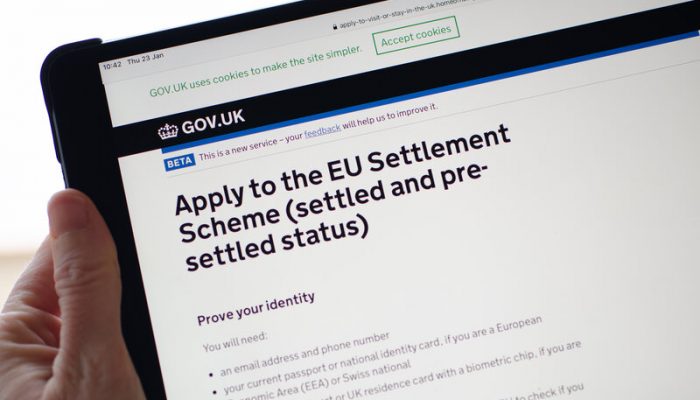
Apply for EU Settled Status Based on Historic Residence in the UK
The EU Settlement Scheme was introduced by the UK to preserve the rights of EU citizens and relevant family members who had been living in the UK prior to the end of the transition period, 11 pm on 31 December 2020. It also provides for an indefinite right for EU citizens to bring ‘joining family members’ to the UK as long as the relationship existed prior to 31 December 2020. The deadline to apply to the EU…

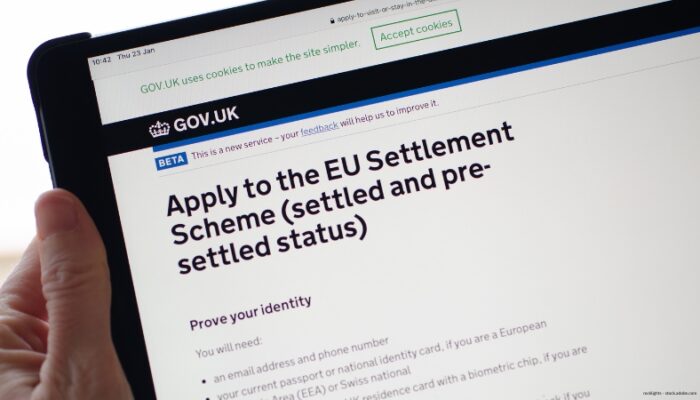
EU Settlement Scheme Settled Status: New Automated Grant Procedure and the Commencement of Pre-Settled Status Removals
On 9 April 2026, the Home Office published a policy paper outlining a shift in the administration of the EU Settlement Scheme. This blog focuses on the expansion of automated grants…
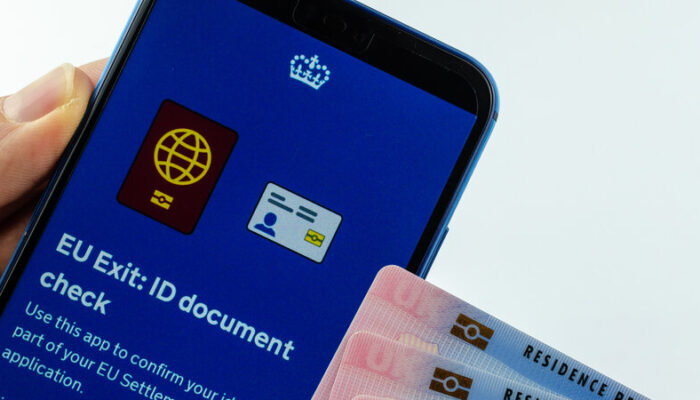
EUSS Changes July 2025: New 30-Month Rule for Settled Status
In order to apply for EU Settled Status (ILR) EU citizens and family members living in the UK have been required to complete a continuous five year period of residence commencing before 31 December 2020, with absences no more than six months in any 12 month period, unless an exception to this applies.
15. How Our Immigration Barristers Can Help
EUSS settled status applications can appear straightforward, but the legal and evidential issues are often more complex than applicants expect. Problems commonly arise in relation to absences, late applications, family relationships, retained rights, derivative rights, suitability issues and refusal remedies.
Our immigration barristers advise and represent EU, other EEA and Swiss citizens, their family members and other applicants under Appendix EU.
Eligibility and Residence Assessment
We can advise on whether you meet the requirements for settled status and how your residence should be presented.
This may include:
- assessing your status history;
- identifying your correct Appendix EU category;
- reviewing your absences from the UK;
- considering whether you can rely on the 30-months-in-60-months rule;
- advising on whether you should wait, apply now or respond to automatic conversion correspondence.
Late Applications and Evidence Strategy
Where an application is late, we can advise on whether there are reasonable grounds for delay and how those grounds should be evidenced.
This may include:
- preparing a chronology of the missed deadline and subsequent delay;
- identifying the evidence needed to support the explanation;
- drafting legal representations;
- advising on the risk of invalidity;
- responding to requests for further evidence.
Family Member and Complex Appendix EU Cases
We regularly advise on family member and complex EUSS cases, including joining family members, retained rights, derivative rights, Zambrano-type issues and family members of qualifying British citizens.
We can assist with:
- relationship evidence;
- dependency evidence;
- sponsor status and eligibility;
- retained rights following divorce, death or domestic abuse;
- applications requiring a paper form;
- cases involving previous refusals or invalid applications.
Appeals, Reapplications and Judicial Review
If your EUSS settled status application has been refused or rejected as invalid, we can advise on the most appropriate next step.
This may include:
- reviewing the refusal or invalidity decision;
- advising on appeal rights and deadlines;
- preparing appeal grounds;
- representing you before the immigration tribunal;
- advising on whether a fresh application is preferable;
- advising on judicial review where appropriate.
Our barristers provide clear, practical and legally rigorous advice from initial assessment through to application, appeal or judicial review.
16. Contact Richmond Chambers Immigration Barristers
Our immigration barristers are approachable, responsive and professionally focused. We provide expert advice and representation in relation to EU Settlement Scheme settled status applications, late applications, family member applications, appeals and related immigration matters.
To discuss your EUSS settled status application with one of our immigration barristers, contact our EEA Nationals and Family Members immigration team on 0203 617 9173 or complete our online enquiry form.
WE CAN ALSO ASSIST WITH
WHAT CAN WE HELP YOU WITH?
To discuss your application for EUSS Settled Status with one of our immigration barristers, contact our personal immigration team on 0203 617 9173 or complete our enquiry form below.

LATEST ARTICLES EXPERT COMMENT AND INSIGHT
FROM OUR IMMIGRATION TEAM
Visiting the UK From Europe? EU, EEA and Swiss Nationals Now Need a UK ETA
By Paul Richmond – Managing Partner


Electronic Travel Authorisation (ETA) Requirement for European Visitors to the UK from 2 April 2025
By Paul Richmond – Managing Partner