

BRITISH CITIZENSHIP
BY NATURALISATION
British Citizenship by Naturalisation in the UK: Requirements, Absences and Processing Times
In This Guide
If you are at least 18 years old and have been granted indefinite leave to remain including Settled Status under the EU Settlement Scheme, or are otherwise free from immigration time restrictions, you may be eligible to apply for British Citizenship by Naturalisation.
1. Can I Apply for British Citizenship by Naturalisation?
In order to be naturalised as a British citizen, you will need to meet certain statutory criteria with regard to your immigration status, length of residence in the UK, future intentions, full capacity, knowledge of the English language and life in the UK, and good character. The requirements for British Citizenship by Naturalisation vary slightly depending on whether you are married to or in a civil partnership with a British citizen or not.
2. Applying for UK Citizenship if You Are Not Married to, or in a Civil Partnership With, a British Citizen
If you are not married to or in a civil partnership with a British citizen, or do not wish to rely on your marriage or civil partnership to a British citizen, the Home Office must be satisfied that:
- You are aged 18 or over and of full capacity and sound mind;
- You were in the UK on the day five years before the date your application is received by the Home Office;
- You have not been absent from the UK for more than 450 days during the intervening five year period;
- You have not been in the UK in breach of the immigration laws at any time during that five year period although the Home Office may treat this requirement as met without further enquiry where you have been granted indefinite leave to enter or remain, including Settled Status, unless concerns arise;
- You have not been absent from the UK for more than 90 days during the 12 month period immediately preceding the date of your application;
- You are not subject to any limit on the period for which you may remain in the UK and have not been subject to any such time limit at any time during the 12 month period immediately preceding the date of your application;
- You are of good character;
- You have sufficient knowledge of the English, Welsh or Scottish Gaelic language;
- You have taken and passed the Life in the UK test; and
- Your intentions are that if your application is successful your home, or principal home, will be in the UK.
3. Applying for UK Citizenship if You Are Married to, or in a Civil Partnership With, a British Citizen
If you are married to or in a civil partnership with a British citizen, the Home Office must be satisfied that:
- You are aged 18 or over and of full capacity and sound mind;
- You are married to, or in a civil partnership with, a British citizen at the date of application;
- You were in the UK on the day three years before the date your application is received by the Home Office;
- You have not been absent from the UK for more than 270 days during the intervening three year period;
- You have not been in the UK in breach of the immigration laws at any time during that three year period although the Home Office may treat this requirement as met without further enquiry where you have been granted indefinite leave to enter or remain, including Settled Status, unless concerns arise;
- You have not been absent from the UK for more than 90 days during the 12 month period immediately preceding the date of your application;
- You are not subject to any time limit on the period for which you may remain in the UK at the date of your application;
- You are of good character;
- You have sufficient knowledge of the English, Welsh or Scottish Gaelic language; and
- You have taken and passed the Life in the UK test.
The exact requirements you will need to satisfy will vary depending on your circumstances. You may want to speak to an immigration lawyer for expert advice.
To discuss your application for Naturalisation as a British Citizen with one of our immigration barristers, contact our British citizenship lawyers on 0203 617 9173 or complete our enquiry form below.
4. English Language and Life in the UK Test Requirements
Applicants for British Citizenship by Naturalisation will usually need to satisfy both an English language requirement and the Life in the UK test requirement, unless an exemption applies. The English language requirement may be met in a number of ways, including by passing an approved English language test at the required level, relying on an accepted academic qualification taught in English, or being a national of a majority English-speaking country.
The Life in the UK requirement is normally met by passing the Life in the UK test and providing the relevant test reference number or, where applicable, evidence of an earlier pass. Applicants who are aged 65 or over are exempt from the knowledge of language and life in the UK requirements. An exemption may also be available where a long-term physical or mental condition prevents the applicant from meeting the requirements, but this will need to be supported by appropriate medical evidence.
Applicants should check the current Home Office guidance before relying on an exemption or previously obtained evidence. If there is any uncertainty about whether the English language or Life in the UK requirements are met, this should be resolved before applying, as an application may be refused if the requirements are not satisfied.
5. Can I Apply for British Citizenship Straight After ILR?
If you are married to or in a civil partnership with a British citizen, you can apply for British Citizenship by Naturalisation as soon as you have been granted Indefinite Leave to Remain. You will need to satisfy all of the other requirements for British Citizenship by Naturalisation outlined above. If you are not married to or in a civil partnership with a British citizen, you will need to have been free of immigration time restrictions for at least 12 months immediately preceding the date of your application. This means that you will be eligible to apply for British Citizenship by Naturalisation 12 months after being granted ILR.
6. When Should I Apply for British Citizenship?
The right time to apply for British Citizenship will depend on the basis of the application and your immigration history. If you are not married to, or in a civil partnership with, a British citizen, you will usually need to have been free from immigration time restrictions for at least 12 months before applying. This will normally mean waiting until 12 months after being granted ILR or Settled Status.
If you are married to, or in a civil partnership with, a British citizen, you can usually apply once you have been granted ILR or Settled Status, provided all of the other requirements are met. In either case, applicants should check that they were physically present in the UK at the start of the relevant 3-year or 5-year qualifying period before submitting the application.
It may be sensible to delay applying if the absence limits are exceeded, if there are unresolved good character concerns, or if further evidence is needed. Applicants should also ensure that they maintain immigration permission until they have attended their citizenship ceremony, as a grant of naturalisation does not take effect until then.
7. How Many Days Can I Stay Outside the UK for British Citizenship?
In order to qualify for UK Citizenship, you will need to have spent not more than 90 days outside the UK during the 12 month period immediately before the date of your application for British Citizenship by Naturalisation. If you are not married to or in a civil partnership with a British citizen, you will also need to have not been away from the UK for more than 450 days during the preceding 5 years. If you are married to or in a civil partnership with a British citizen, you will need to have spent not more than 270 days outside the UK in the previous 3 years.
8. How to Calculate Absences for a British Citizenship Application
Absences for a British citizenship application should be calculated by reference to the date of application. Applicants should work backwards from the intended date of submission and check the relevant 3-year or 5-year qualifying period, as well as the final 12 months before the application.
In all cases, an applicant should not normally have been absent from the UK for more than 90 days in the 12 months immediately before the date of application. In addition, applicants applying on the basis of marriage or civil partnership with a British citizen should not normally have been absent for more than 270 days in the 3-year qualifying period. Other applicants should not normally have been absent for more than 450 days in the 5-year qualifying period.
Before applying, you should carefully review your travel history, including passports, tickets, booking records and any other records of entry to and departure from the UK. Where the absence limits are exceeded, it may still be possible to ask the Home Office to exercise discretion, but this should be addressed clearly in the application and supported by evidence. In some cases, it may be preferable to delay applying until the absence figures fall within the normal limits.
9. What Is the Good Character Requirement for British Citizenship?
The British Nationality Act 1981 requires any person who wishes to naturalise as a British Citizen to be of ‘good character’. ‘Good character’ is not defined in the Act, but Home Office nationality policy guidance explains how the ‘good character’ requirement will be assessed. This contains a non-exhaustive list of conduct that will mean that an applicant is not of ‘good character’ including criminality, terrorism, financial soundness, notoriety, deception and dishonesty and immigration-related matters. The current good character guidance also states that applications made from 10 February 2025 will normally be refused where the applicant previously entered the UK illegally, or arrived without a required valid entry clearance or electronic travel authorisation having made a dangerous journey, subject to the guidance on cases outside the applicant’s control and applicable refugee defences.
It is important that the good character requirement is considered carefully in any application for British Citizenship by Naturalisation as apparently innocuous matters can lead to an adverse decision. Advice from an immigration lawyer will ensure that any potential good character issues are identified and properly addressed as part of your UK Citizenship application.
10. Is There Any Flexibility in the Criteria for Naturalisation as a British Citizen?
The Secretary of State has a discretion to treat applicants for UK Citizenship as meeting some of the requirements even where those requirements are not met. This includes:
- The requirement to have been in the UK at the start of the three or five year qualifying period, in special circumstances;
- The permitted absence requirements, for example if you have been absent from the UK for more than 90 days in the 12 month period prior to your application;
- The 12 month ‘no time limit’ requirement;
- The requirement not to have been in the UK in breach of the immigration laws at any time during the three or five year qualifying period.
The Secretary of State has a discretion to waive the language and life in the UK requirements on grounds that the applicant is aged 65 or over or has a long-term physical or mental condition that prevents them from meeting the requirements.
The Secretary of State has no discretion to waive, or to treat applicants as meeting, the following requirements:
- To be free from immigration time restrictions at the date of application;
- To be of good character.
It is important that any application for British Citizenship requiring an exercise of discretion is prepared and presented carefully. Advice from an immigration lawyer should be sought at an early stage.
11. Common Reasons British Citizenship Applications Are Refused
British Citizenship applications may be refused where an applicant applies too early, for example before they have held ILR or Settled Status for the required period, or before they are free from immigration time restrictions. Refusals can also arise where the applicant was not physically present in the UK at the start of the relevant 3-year or 5-year qualifying period, unless discretion is available and properly requested.
Other common issues include excess absences, gaps or uncertainty in lawful residence, and good character concerns. These may include criminality, immigration breaches, financial matters, deception or dishonesty, or a failure to disclose relevant information. Even where an issue appears minor, non-disclosure may itself cause difficulty if the Home Office considers that the applicant has not been frank in the application.
Applications may also be delayed or refused where referee requirements are not met, evidence is incomplete, or the information provided is inconsistent with the applicant’s travel history or Home Office records. Where any risk factor applies, applicants should consider seeking legal advice before applying so that the issue can be assessed and, where appropriate, addressed with evidence and submissions at the outset.
12. Can EEA, EU or Swiss Nationals and Their Family Members Apply for Naturalisation as a British Citizen?
Yes, EEA and Swiss nationals and their family members can apply for UK Citizenship. For applications made from 1 July 2021 onwards, they will normally need to show that they are free from immigration time restrictions at the date of application, usually by holding ILR under the EU Settlement Scheme Settled Status or ILR on another basis. A person can no longer apply for citizenship based on permanent residence status acquired under the EEA Regulations before 1 July 2021. Where a person relies on an automatically acquired Withdrawal Agreement right to reside in the UK permanently, rather than Settled Status, they will need to provide evidence of that right and evidence of lawful residence throughout the qualifying period. Applicants under section 61 must normally have been free from immigration time restrictions for 12 months before applying, unless discretion applies.
EEA and Swiss nationals and their family members can also apply for naturalisation if they have been granted indefinite leave to remain under the Immigration Rules on another basis and, where applying under section 61, have been free from immigration time restrictions for 12 months prior to the date of application, are entitled by virtue of diplomatic status to exemption from UK immigration control or are Irish citizens, who are generally considered settled from arrival in the UK for naturalisation purposes, subject to limited exceptions.
13. What About BOTCs, BNOs, BOCs and Other British Nationals?
If you are a British Overseas Territories Citizen, a British National Overseas, a British Overseas citizen, a British subject, or a British protected person then you are not a British citizen; however naturalisation is unlikely to be suitable for you as you are likely to have an alternative route to British citizenship through registration.
14. Who Can Be a Referee in a British Citizenship Application?
You will need to provide two referees for your British Citizenship by Naturalisation application. One referee should be a person of any nationality who has professional standing, such as a minister of religion, civil servant, or a member of a professional body such as an accountant, solicitor or barrister, who is not representing you with the application. The other referee must normally be the holder of a British citizen passport and either a professional person or over the age of 25. Each referee must have known you for at least three years and must not be related to you, related to the other referee, your solicitor or agent representing you with the application, or employed by the Home Office.
15. Documents Needed for a Naturalisation Application
The documents required for a naturalisation application will depend on the basis on which the application is made and the applicant’s personal circumstances. In most cases, applicants will need to provide evidence of identity and nationality, including current and previous passports or travel documents, together with evidence that they hold ILR, Settled Status or are otherwise free from immigration time restrictions.
Applicants will also need to provide evidence that they meet the English language requirement and have passed the Life in the UK test, unless an exemption applies. The application must be supported by two completed referee declarations. Where an applicant applies as the spouse or civil partner of a British citizen, evidence of the marriage or civil partnership and evidence of the spouse’s or civil partner’s British citizenship should also be provided.
You should ensure that your travel history is complete and consistent with your passport and other records. In some cases, evidence of lawful residence during the qualifying period may also be required, particularly where this is not clear from Home Office records. Where there are any good character issues, excess absences, gaps in lawful residence or other matters requiring discretion, these should be addressed with appropriate supporting evidence at the time of application.
16. How Much Does It Cost to Apply for Naturalisation?
The Home Office application fee for an application for Naturalisation as a British Citizen is £1,709. You will need to pay a further £130 to arrange a citizenship ceremony, including the administration of a citizenship oath and pledge at the ceremony. The total fee payable for an adult Form AN naturalisation application is therefore £1,839. These figures are correct as at 11 June 2026.
17. How Long Does It Take to Get British Citizenship?
Applications for Naturalisation as a British Citizen can usually be decided within 6 months, but some applications may take longer. However, we typically receive UK Citizenship decisions from the Home Office within about 3 months.
18. Can I Leave the UK While Waiting for My UK Citizenship Application to Be Processed?
Yes, after submitting your application, you are free to travel using your valid passport and evidence of your valid immigration status while you are waiting for a decision on your application. Most people who apply online are able to keep their documents while their application is processed.
A naturalisation application does not provide you with immigration permission and you will need to demonstrate an entitlement to re-enter the UK at the UK border. Therefore, you should also travel with evidence of your ILR, or other valid immigration status. You must also ensure that you have immigration permission to remain in the UK until you have attended your citizenship ceremony, because you do not become a British citizen until the ceremony.
You should keep in mind that you will usually be required to enrol your biometric information within 45 days of submitting your British citizenship application. This may involve attending a biometrics appointment in person. Failure to provide biometric information when required will invalidate your application.
You may also wish to keep in mind that if your British Citizenship application is approved, you will need to arrange and attend a citizenship ceremony within 90 days of receiving your invitation.
19. What Happens After I Have Applied for British Citizenship?
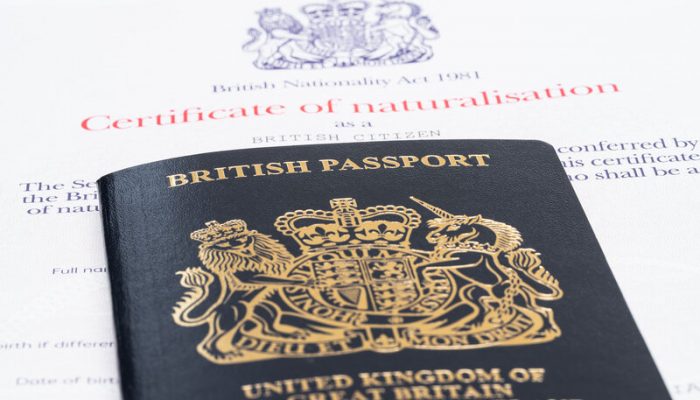
If your application for naturalisation as a British citizen is successful, you will have to attend a citizenship ceremony. At the end of the ceremony you will be presented with your certificate of naturalisation as a British citizen. You will then be able to apply for a British passport.
20. Applying for a British Passport After Naturalisation
A person does not become a British citizen until they have attended their citizenship ceremony and received their certificate of naturalisation. Once the certificate has been issued, they can apply for a British passport.
Applicants should plan carefully if they intend to travel shortly after becoming British. A first British passport application may take time, and a certificate of naturalisation is not a travel document. British citizens who also hold a foreign passport may need to consider how they will prove their right to enter the UK before travelling.
Where a British citizen holds a foreign passport and does not have a valid British passport, it may be possible to apply for a certificate of entitlement to the right of abode. This is not a visa, but evidence of the right to live and work in the UK without immigration restrictions.
21. What Happens if My British Citizenship Application Is Refused?
If a British Citizenship application is refused, the Home Office should explain the reasons for refusal in the decision notice. There is not usually a straightforward right of appeal against a refusal of naturalisation as a British citizen. Depending on the facts, it may be possible to request reconsideration of the decision or, in some cases, consider a legal challenge.
In other cases, a fresh application may be more appropriate, particularly where the reason for refusal can be remedied by waiting, providing further evidence or addressing an issue that was not properly dealt with in the original application. However, applicants should not simply reapply without first considering the reasons for refusal.
Advice should be sought before reapplying where the refusal involved good character, deception, unlawful residence, excess absences or a request for discretion. These issues can affect both the prospects of a further application and the way in which evidence and submissions should be prepared.
22. Frequently Asked Questions: British Citizenship by Naturalisation
Can I apply for British Citizenship by Naturalisation if I have Settled Status?
You may be eligible to apply if you have indefinite leave to remain, including Settled Status under the EU Settlement Scheme, or are otherwise free from immigration time restrictions, provided you meet the other naturalisation requirements.
Do I need to wait 12 months after ILR before applying for British citizenship?
If you are not married to, or in a civil partnership with, a British citizen, you will usually need to have been free from immigration time restrictions for at least 12 months before applying. If you are married to, or in a civil partnership with, a British citizen, you can apply as soon as you have been granted ILR, provided the other requirements are met.
Can I apply for British citizenship if I was outside the UK exactly three or five years ago?
If you are applying as the spouse or civil partner of a British citizen, you must usually have been physically present in the UK at the start of the 3-year qualifying period. Other applicants must usually have been physically present in the UK at the start of the 5-year qualifying period. If you were outside the UK on the relevant date, your application may be refused unless discretion is available and properly requested.
How do I calculate absences for British citizenship?
Absences are calculated by reference to the date of application. Applicants should check the final 12 months before applying, as well as the relevant 3-year or 5-year qualifying period. The Home Office normally counts whole days outside the UK only, so the day of departure and day of return are not usually counted as absences.
What documents do I need for a naturalisation application?
The documents required will depend on your circumstances, but will usually include evidence of identity and nationality, evidence of ILR, Settled Status or other freedom from immigration time restrictions, English language evidence, Life in the UK test evidence and referee declarations. Applicants relying on marriage or civil partnership to a British citizen will also need evidence of the relationship and the spouse’s or civil partner’s British citizenship.
What does the good character requirement mean in a naturalisation application?
Applicants for naturalisation must be of good character. Home Office guidance considers matters including criminality, deception and dishonesty, immigration breaches, financial soundness, notoriety and other conduct. The requirement should be considered carefully before applying, particularly where there has been any previous issue with the Home Office or another public authority.
Can my British citizenship application be refused because of a criminal conviction?
Yes, a criminal conviction may lead to refusal if the Home Office is not satisfied that you meet the good character requirement. A conviction will not always mean that an application must be refused, but the nature of the offence, sentence, timing, pattern of conduct and any relevant mitigating factors may all be relevant. Criminal convictions, including overseas convictions and pending prosecutions, should be disclosed.
Can I apply for British citizenship if I have unpaid tax or debt?
Unpaid tax, significant debt or other financial issues may be relevant to the good character requirement, depending on the facts. An application will not normally be refused simply because a person has debt, but deliberate non-payment, dishonesty, unresolved liabilities or misleading information may cause difficulties. Applicants should take advice where financial matters may raise good character concerns.
What happens if I make a mistake in my British citizenship application?
A mistake should be corrected as soon as possible. If the application has not yet been submitted, the form should be amended before submission. If it has already been submitted, the appropriate course will depend on the nature of the error. Inaccurate or incomplete information may cause delay or refusal, and deliberate non-disclosure or a false declaration may create good character difficulties.
Can I reapply if my naturalisation application is refused?
In many cases it is possible to make a fresh application after a refusal, but applicants should first consider why the application was refused. Depending on the facts, it may be more appropriate to request reconsideration if the decision was not soundly based on law, policy or procedure. Advice should be sought before reapplying where the refusal involved good character, deception, unlawful residence, absences or discretion issues.


23. How Our Immigration Barristers Can Help
TApplying for British Citizenship by Naturalisation is an important step and can be legally and evidentially complex. At Richmond Chambers, our specialist immigration barristers provide clear advice, detailed application preparation and expert legal representation to support applicants throughout the naturalisation process.
British Citizenship Advice and Representation
Whether you are applying after being granted ILR, relying on Settled Status under the EU Settlement Scheme, or applying as the spouse or civil partner of a British citizen, we can:
- Assess your eligibility under the British Nationality Act 1981 and relevant Home Office nationality guidance;
- Advise on the residence, absence, lawful residence, immigration status, English language, Life in the UK and good character requirements;
- Check whether you meet the physical presence requirement at the start of the relevant 3-year or 5-year qualifying period;
- Assist with preparing a fully evidenced application that addresses the relevant statutory requirements and any potential risk factors;
- Prepare detailed legal representations in support of your application, including where discretion is required.
Our approach is careful, practical and tailored to the facts of each case, with the aim of reducing the risk of delay, uncertainty or refusal.
Support With Residence, Absences and Discretion
We regularly assist applicants who need advice on residence and absence issues, including:
- Calculating absences during the relevant 3-year or 5-year qualifying period;
- Assessing absences in the final 12 months before applying;
- Considering whether the Home Office may be asked to exercise discretion where absence limits are exceeded;
- Advising where an applicant was not physically present in the UK at the start of the qualifying period;
- Reviewing gaps or uncertainty in lawful residence before an application is submitted.
Where a discretion request is required, our barristers can advise on the prospects of success and prepare focused evidence and submissions addressing the relevant Home Office guidance.
Good Character and Complex Immigration Histories
We also advise applicants where good character or immigration history issues may arise, including:
- Criminal convictions, cautions, pending prosecutions or overseas offences;
- Previous immigration breaches, overstaying, unlawful residence or deception issues;
- Tax, debt, bankruptcy, NHS debt or other financial matters;
- Errors, omissions or inconsistencies in previous applications or Home Office records;
- Failure to disclose information that may be relevant to the naturalisation application.
Our barristers can help identify potential good character concerns before an application is made and advise on whether further evidence, explanation or delay may be appropriate.
Naturalisation After ILR, Settled Status or Marriage to a British Citizen
We advise on the different requirements that apply depending on the basis of the naturalisation application, including:
- Applications by individuals who are not married to, or in a civil partnership with, a British citizen and who usually need to have been free from immigration time restrictions for at least 12 months;
- Applications by spouses and civil partners of British citizens who may be able to apply once ILR or Settled Status has been granted;
- Applications by EEA, EU and Swiss nationals and their family members relying on Settled Status or another form of indefinite leave;
- Applications involving Irish citizens or individuals who are otherwise free from immigration time restrictions.
We can advise on when to apply and whether there are any reasons to delay the application before it is submitted.
British Citizenship Refusals, Reconsideration and Reapplications
If your application for British Citizenship by Naturalisation has been refused, our immigration barristers can:
- Review the refusal decision and advise on the reasons for refusal;
- Consider whether a request for reconsideration may be appropriate;
- Advise on whether a fresh application is likely to be the better course;
- Prepare evidence and legal submissions addressing the issues raised by the Home Office;
- Advise on possible legal challenge options where appropriate.
We provide calm, strategic advice on the available options and the most appropriate next steps following a refusal.
Whatever stage you are at in your British Citizenship journey, Richmond Chambers offers clear, dependable legal advice and high-quality representation from start to finish.
24. Contact Richmond Chambers Immigration Barristers
At Richmond Chambers, we pride ourselves on being approachable, responsive and proactive in understanding and meeting our clients’ needs. We are a highly driven team, committed to delivering clear and reliable immigration and nationality advice as part of a professional and friendly service.
To speak with one of our immigration barristers about your British Citizenship by Naturalisation application, please call us on +44 (0)20 3617 9173 or complete the online enquiry form below.
WE CAN ALSO ASSIST WITH
WHAT CAN WE HELP YOU WITH?
To discuss your British Citizenship by Naturalisation application with one of our immigration barristers, contact our personal immigration team on 0203 617 9173 or complete our enquiry form below.