



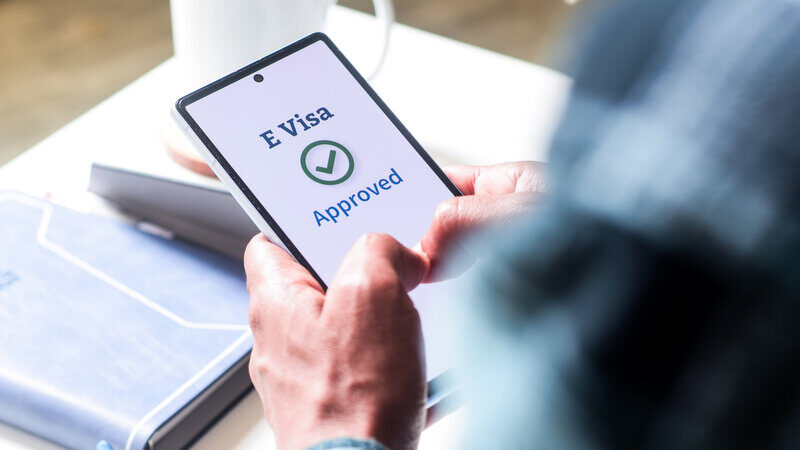
UK eVisa Rollout: Key Updates and Guidance

In This Article
The UK has now completed the principal move from physical immigration documents to digital immigration status. An eVisa is accessed through a UK Visas and Immigration (UKVI) account and records a person’s identity, immigration status and the conditions attached to it. The latest Home Office eVisa rollout updates confirm that, since 1 July 2026, successful new applications for visas to come to the UK normally result in an eVisa rather than a visa vignette in the passport.
The practical steps depend on whether you are making a new application, already have a UKVI account, hold an expired Biometric Residence Permit (BRP), rely on older evidence of settlement, or have a different form of digital permission such as an Electronic Travel Authorisation. This article explains the current position.
1. What Is a UK eVisa?
A UK eVisa is a secure digital record of a person’s identity, immigration status and the conditions attached to that status. It can show the type of permission held, when that permission expires and whether the person is permitted to work or study.
The eVisa is evidence of the underlying immigration status. Creating a UKVI account, linking an eVisa or replacing physical evidence with a digital record does not itself change the person’s status or the conditions of their permission.
A person can use the online record to obtain share codes and prove their rights for a particular purpose. Separate services apply to right to work checks and right to rent checks, and government bodies may also receive status information directly where the law permits.
2. Who Gets a UK eVisa Now?
Current Home Office guidance states that a person will receive an eVisa when a visa or another form of permission to be in the UK is granted.
From 1 July 2026, UKVI stopped issuing visa vignette stickers to successful new applicants for visas to come to the UK. A successful new Standard Visitor visa application therefore normally results in an eVisa, although the applicant must follow the decision communication and any instructions about an accompanying travel document.
Each person needs their own UKVI account to access their eVisa, including a partner or child applying as a dependant. A parent, guardian or other permitted proxy may manage a child’s account.
If a person is granted protection status or another form of permission following an asylum claim, the Home Office may create the UKVI account automatically where the person has a valid passport or a sufficiently recently expired BRP. Otherwise the person may be asked to create an account. The decision letter should explain the correct process.
A person who already has a UKVI account should not create a duplicate account. They should first try to sign in, recover access if necessary and check whether the new status has been linked to the existing account.
3. Who Does Not Need a UK eVisa?
Not every digital permission or record used for UK travel is an eVisa. The distinctions matter:
- An Electronic Travel Authorisation (ETA) is a digital permission to travel for eligible non-visa nationals. It is not an eVisa and does not itself grant permission to enter the UK.
- British and Irish citizens do not need an eVisa. They should travel with the appropriate passport or, where applicable, a passport containing or linked to valid evidence of right of abode.
- A person who is exempt from immigration control may obtain a digital record of exemption. This is accessed through a UKVI account but is not a visa or an eVisa.
- A person with right of abode may obtain a now digital certificate of entitlement. This is not a visa and does not expire, although the UKVI account must be updated when passport or personal details change.
A person with an older valid visa vignette may continue to rely on it until it expires, subject to the terms of the permission and current travel instructions. New applicants should check their decision letter and UKVI account rather than assume that a sticker will be placed in the passport.
4. What Should I Do With an Expired BRP?
All BRPs have now expired and an expired card cannot be used as evidence of permission to travel to the UK. It does not replace the need to access and check the eVisa before travel.
An expired BRP can currently be used to create a UKVI account for 24 months after the expiry date printed on the card or until 31 December 2026, whichever comes first. It may also be used as a sign-in document for the online service. The share code is then generated through the UKVI account, rather than by the expired card itself.
Do not assume that an expired BRP will allow biometric information to be reused in a future application. Whether identity can be confirmed by an app, existing records or an appointment depends on the application and the instructions issued by UKVI.
A person should normally keep the card until they have successfully accessed their eVisa, checked the record and followed any instructions in their decision correspondence. Once it is no longer needed, the current GOV.UK instructions on destroying an expired BRP should be checked. Some protection guidance separately advises retaining the card for future applications or personal records, so the individual decision letter may also be relevant.
5. What If I Have Settlement but No eVisa?
A person in the UK who has physical evidence with no expiry date showing indefinite leave to remain or indefinite leave to enter can choose to make a free No Time Limit application. This includes qualifying wet-ink stamps or indefinite-leave vignettes in an old passport.
The No Time Limit process is not a general conversion route for every old or expired visa. The physical document must show settlement and have no expiry date. Current guidance states that an application may take up to six months, and the person can continue to use the qualifying physical document while the application is being processed.
Further detail is available in our guide to making a No Time Limit application.
6. How Does an eVisa Affect Travel?
Before travelling to or from the UK, an eVisa holder should sign in to the UKVI account and check that the eVisa is correct. The account should contain the current passport or travel document, and the personal and document details should exactly match the information given to the airline, rail operator or other carrier.
Carriers will normally verify immigration permission automatically. If the carrier cannot verify the record, the traveller may provide a travel share code or valid physical immigration evidence, if they hold it. A travel share code is valid for 90 days and can be used more than once during that period.
An expired BRP or BRC cannot be used as permission to travel. A person with legacy settlement evidence, a certificate of entitlement, a Home Office travel document or another valid physical document may wish to carry it as additional proof where the current official guidance permits this.
Travellers should also check the entry, exit and transit requirements of other countries. Our separate guide to travelling with an eVisa explains the pre-travel steps in more detail. The current carrier guidance for travel to the UK should also be checked shortly before departure.
7. What Is a Form for Accompanying an eVisa (FAV)?
Some successful applicants may be issued with a form for accompanying an eVisa, commonly referred to as a FAV. Where one is issued, the applicant will usually need to return to the visa application centre to collect it. The FAV, when linked to the eVisa, allows the person to travel to the UK.
A person should follow the decision letter and visa application centre instructions carefully. They should not travel without collecting and carrying the FAV where UKVI has said that one is required.
8. What Are the Benefits and Limitations of an eVisa?
An eVisa cannot be lost, stolen or physically damaged in the same way as a card or passport sticker. It can make it quicker to prove status to the border, an employer, a landlord or another authorised person, while allowing the holder to share only the information needed for the particular check.
The system also removes the need for routine production and delivery of BRPs and routine visa vignettes. However, it does not eliminate all physical processes. An applicant may still need to provide biometric information in person, submit or collect a passport, collect a FAV, or carry a Home Office travel document or other valid physical evidence.
The UKVI account service can be used to update personal and passport details. It cannot be used to change the substance of a visa or immigration decision. If the eVisa displays the wrong status, expiry date or conditions, the error should be reported through the dedicated service.
9. Help With UKVI Account Access or eVisa Errors
The GOV.UK eVisa service brings together the current account, viewing, travel and correction tools.
The appropriate support route depends on the problem:
- Use the account recovery service if you cannot sign in to the UKVI account.
- Use the account update service if a passport, name, nationality, photograph, email address or telephone number has changed.
- Use the dedicated eVisa error service if the record shows incorrect status information, a share code cannot be generated, or a technical error prevents the eVisa being viewed.
- Use UKVI webchat for other questions about the eVisa or UKVI account.
UKVI currently aims to fix most reported eVisa errors within five working days, with complex cases taking up to 15 working days. These are operational targets rather than guaranteed legal deadlines.
10. Contact Our Immigration Barristers
If you need advice about accessing an eVisa, correcting the digital record, travelling where a carrier cannot verify your status, or proving legacy settlement, our immigration barristers in London can assist. Please contact us on 0203 617 9173 or complete the enquiry form to arrange a consultation.
11. Frequently Asked Questions: UK eVisa Rollout
Is an eVisa the same as an Electronic Travel Authorisation?
No. An eVisa records immigration status or permission to be in the UK, while an ETA is a separate digital permission to travel for eligible people who do not need a visa for the proposed visit.
Do successful Standard Visitor visa applicants now receive an eVisa?
Yes, under the current rollout a successful new UK visa application, including a Standard Visitor visa application, normally results in an eVisa. The applicant must follow the decision letter and any instructions about a FAV or other document needed for travel.
Can I travel using an expired BRP?
No. An expired BRP cannot be used as evidence of permission to travel to the UK. Check the eVisa, current travel document and any FAV requirement before departure.
How long can I use an expired BRP to create a UKVI account?
Current guidance permits use for 24 months after the printed expiry date or until 31 December 2026, whichever comes first. This is an operational rule that should be checked again before relying on it.
What should I do if I have indefinite leave but only an old stamp or vignette?
A person in the UK with no-expiry physical evidence of indefinite leave may make a free No Time Limit application to obtain an eVisa. The process is not available merely because a person once held a time-limited vignette.
What is a form for accompanying an eVisa?
A FAV is a physical form that some applicants are instructed to collect. When it is linked to the eVisa, it permits travel, and it should be carried where the decision communication says it is required.
What should I do if my eVisa shows the wrong status or expiry date?
Report the error through the dedicated GOV.UK eVisa error service. Updating account contact or passport details is a separate process and does not correct the substance of the immigration decision.
Does moving to an eVisa change my immigration status?
No. The eVisa is the digital record of the status and conditions already granted. Moving from physical evidence to digital evidence does not itself alter those rights or conditions.
Please note that the information provided in this article is for general guidance only and is based on the immigration rules and policies in force at the date of publication. Immigration law and Home Office policy can change frequently, and requirements may vary depending on individual circumstances. Legal advice should always be sought in relation to your specific situation.