



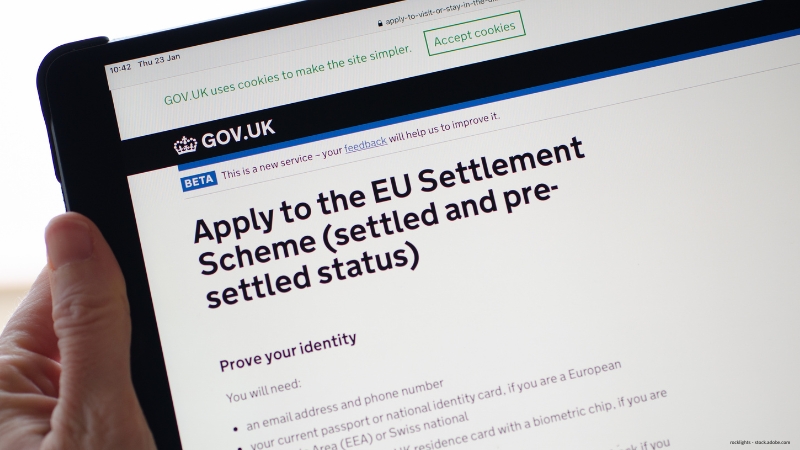
EU Settlement Scheme Settled Status: New Automated Grant Procedure and the Commencement of Pre-Settled Status Removals

In This Article
On 9 April 2026, the Home Office published a policy paper outlining a shift in the administration of the EU Settlement Scheme. This blog focuses on the two key announcements in the paper: the expansion of automated grants for settled status and, for the first time, the announcement of a systematic process for removing pre-settled status from individuals who no longer meet residency requirements. As at the end of 2025, approximately 1.4 million people still held pre-settled status, making these changes relevant to a substantial portion of the UK’s EEA and Swiss population.
1. What Is Settled Status Under the EU Settlement Scheme (EUSS)?
Settled Status is generally granted to applicants to the EU Settlement Scheme who are able to demonstrate five years’ continuous residence in the UK, the Channel Islands or the Isle of Man. Unless you are a joining family member, you will need to have started living in the UK by 31 December 2020. If you are granted Settled Status under the EU Settlement Scheme you will be able to stay in the UK indefinitely. If you have Settled Status, you can spend up to five years in a row outside the UK (or four years if you are a Swiss citizen) without losing your Settled Status.
2. Streamlining the Transition to Settled Status
In the new policy paper, the Home Office has announced changes to its automated systems to simplify the process by which pre-settled status holders acquire settled status. The core of this update is a new residence check that looks for 30 months of tax and benefit payments within the most recent 60-month period. The “30 in 60” rule, introduced in July 2025, allows applicants to meet the residence requirement by demonstrating that they have been present in the UK for at least 30 months (2.5 years) in total within the most recent 60-month (5-year) period. It was introduced with the aim of simplifying the previous complex requirements set out in the Withdrawal Agreement, which generally require individuals to prove that they have not been absent from the UK for more than six months in any 12-month period over five years, with a limited number of exceptions. By using existing government data, the Home Office now aims to convert eligible individuals automatically to settled status without requiring them to submit a separate application.
However, not every pre-settled status holder is eligible for this automated route. The system cannot currently convert EEA citizens who lack a 30-month history of tax or benefit data, non-EEA national family members, joining family members, or those under the age of 18. Additionally, individuals with derivative rights, or those who have obtained another form of UK immigration status, must still apply for settled status through the standard routes. For those who are not converted automatically, pre-settled status will continue to be extended by five years to ensure that they maintain lawful status in the UK.
3. New Procedures for Removing Pre-Settled Status
The Home Office has also begun to remove pre-settled status from individuals who have ceased to maintain continuous residence in the UK, announcing a new measure that has been anticipated for some time. This process is designed to ensure that only those who meet the requirements of the Withdrawal Agreement continue to hold status. The Home Office has established a two-stage check to identify these individuals. The first stage involves checking tax and benefit data to verify residence, while the second stage uses Home Office travel data to determine whether a person has been outside the UK for an extended period. The department is currently prioritising cases involving those who have been outside the UK for the longest time, specifically targeting those with absences of five years or more.
4. Safeguards Against Disproportionate Removal
The Home Office has committed to several safeguards to ensure that status is removed only where it is proportionate to do so. Before a final decision is made, individuals will be contacted through the email address and telephone number associated with their UKVI account. The standard period for responding and providing evidence of UK residence or explaining absences is 28 days. A further extension of 28 days to provide this evidence is usually granted on request, and support is available for vulnerable individuals to help them provide the necessary documentation.
The Home Office’s guidance outlines how this proportionality assessment will be implemented in practice:
“When considering whether it is proportionate to proceed with a cancellation or curtailment decision, you must balance the individual circumstances of the case against the legitimate aim of maintaining an effective system of immigration control. This requires consideration of the following factors in assessing the proportionality of your decision:
- the circumstances, severity and weight of the individual’s conduct
- any other relevant factors which would affect the impact of a curtailment or cancellation decision on the individual, such as age, state of health or integration
The circumstances, severity and weight of the individual’s conduct must first be considered. If you are satisfied the individual’s conduct is sufficient to warrant consideration of cancellation or curtailment of the person’s leave, you must then consider any other relevant factors which would affect the proportionality of a curtailment or cancellation decision, such as the individual’s age, state of health or integration, paying particular regard to the section 55 duty in respect of the best interests of children.”
Relevant factors taken into consideration include an individual’s:
- age
- state of health
- vulnerabilities (such as disabilities, whether or not the status holder has been homeless or is a victim of domestic abuse or violence)
- whether the individual can reasonably be regarded as resident in the UK
- the length of time that the individual has resided in the UK, both in terms of duration and as a proportion of their life
- the ties that the individual has to the UK, including family (and whether family members, such as dependants, will be impacted, paying particular regard to the section 55 duty in respect of the best interests of children), work, study and private life
- the ties that the individual has in their home country
- any specific compelling compassionate circumstances relating to the individual or their family
- economic situation
- integration
Our barristers are closely monitoring the Home Office’s implementation of these measures and will be available to provide expert advice to individuals who may be affected by these changes.
5. Applying for Settled Status under the EU Settlement Scheme
If you or a family member are not eligible for an automated grant, you may wish to apply for Settled Status manually. In order to qualify for Settled Status, you will need to satisfy UK Visas & Immigration that:
- you are a relevant EEA citizen; or
- you are a family member of a relevant EEA citizen; or
- you are a family member who has retained the right of residence by virtue of a relationship with a relevant EEA citizen; or
- you are a person with a derivative right to reside; or
- you are a person with a Zambrano right to reside; and
- you started living in the UK by 31 December 2020 (or you are a joining family member who arrived after 31 December 2020 and subsequently completed a continuous qualifying period of residence of at least five years); and
- you have completed a continuous qualifying period of residence of at least five years.
Generally, in order to demonstrate five years’ continuous residence, you will need to show that you have lived in the UK, the Channel Islands or the Isle of Man for at least six months in every 12-month period during a consecutive five-year period. As above, since July 2025, additional exceptions mean that holders of pre-settled status can now rely on a period of residence of at least 30 months in total in the 60-month period prior to the date of their application in order to qualify for Settled Status.
Under Appendix EU to the Immigration Rules, the following absences will not be considered to break the continuous qualifying period:
- a single period of up to 12 months for an important reason such as childbirth, serious illness, study, vocational training or an overseas work posting;
- a period of compulsory military service of any length;
- time spent abroad as a Crown servant, or as the family member of a Crown servant;
- time spent abroad in the armed forces, or as the family member of someone in the armed forces.
The Home Office has also published a number of additional concessions relating to absences resulting from COVID-19.
6. How Our Immigration Barristers Can Help
Our immigration barristers regularly assist EU, EEA and Swiss citizens, and their family members, to apply to the EU Settlement Scheme.
Whether you require expert advice on the requirements of the EU Settlement Scheme, an independent assessment of your prospects of qualifying under the EU Settlement Scheme, or professional assistance with preparing an EU Settlement Scheme application or appeal, our immigration barristers can help.
We pride ourselves on being approachable and proactive in understanding and meeting our clients’ needs. We are a highly driven team, dedicated to providing clear and reliable immigration advice to EU, EEA and Swiss citizens and their family members as part of a professional and friendly service.
7. Frequently Asked Questions: EU Settlement Scheme
What is settled status under the EU Settlement Scheme?
Settled status is generally granted to eligible applicants under the EU Settlement Scheme who can show five years’ continuous residence in the UK, the Channel Islands or the Isle of Man.
Can settled status now be granted automatically?
In some cases, yes. The Home Office has announced an expanded automated process using existing government data to identify certain eligible pre-settled status holders.
What is the “30 in 60” rule?
The “30 in 60” rule, introduced in July 2025, is a new, more flexible alternative for pre-settled status holders to qualify for Settled Status (indefinite leave to remain). It allows applicants to meet the residence requirement by demonstrating that they have been present in the UK for at least 30 months (2.5 years) in total within the most recent 60-month (5-year) period.
Who may not be eligible for automatic conversion to settled status?
The automated process does not currently cover EEA citizens without sufficient tax or benefit data, non-EEA national family members, joining family members, those under 18, and individuals with derivative rights or another form of UK immigration status.
Can pre-settled status be removed?
Yes. The Home Office has announced a process for removing pre-settled status from individuals who no longer meet the continuous residence requirements.
What happens before pre-settled status is removed?
The Home Office says it will contact the individual, allow time to respond with evidence, and consider proportionality before making a final decision.
Can I still apply for settled status manually?
Yes. If you are not eligible for an automated grant, you may still apply for settled status through the usual process if you meet the requirements.
Please note that the information provided in this article is for general guidance only and is based on the immigration rules and policies in force at the date of publication. Immigration law and Home Office policy can change frequently, and requirements may vary depending on individual circumstances. Legal advice should always be sought in relation to your specific situation.